d o t o r e g . c o m
Dr. Mete ALPASLAN
Propafenone and the ECG
Propafenone
 is a Class Ic antiarrhythmic agent and a sodium channel blocker.
also has mild beta-blocking and calcium channel blocking effects.
Propafenone MAY be used for
the treatment of paroxysmal supraventricular tachycardia
the treatment of ventricular tachycardia
acute termination of atrial fibrillation
reduction of VPCs
ECG changes that may be observed in patients under Propafenone therapy
(at therapeutic concentrations)
Decreased atrial rate in atrial flutter.
Conversion of atrial fibrillation to sinus rhythm.
Reduction in the number of APCs and VPCs
Atrial flutter may develope in patients taking propafenone for recurrent episodes of atrial fibrillation (both classical and atypical electrocardiographic and atrial activation patterns have been described). The incidence of atrial flutter in patients taking class IC antiarrhythmic drugs for recurrent atrial fibrillation is estimated to range from 3.5-20%.
ECG abnormalities which may be observed in patients with Propafenone overdose
Bradycardia
Sinoatrial block
Atrioventricular (AV) block
1:1 atrioventricular conduction in atrial flutter
Ventricular tachycardia
QRS widening
QT interval prolongation (as a result of QRS widening)
Cardiac memory (persistent T wave inversions even after disappearance of QRS widening)
References
Indian Pacing Electrophysiol J 2010;10:278-280.
Heart 2001;85:424-429.
Chou's Electrocardiography in Clinical Practice. Adult and Pediatric. 5th ed. Philadelphia. WB Saunders. 2001.
CJEM 2004;6:349-356.
Indian Pacing Electrophysiol J 2010;10:278-280.
J Cardiovasc Electrophysiol 2006;17:565-566.
Pacing Clin Electrophysiol 2007;30:1161-1164.
Cardiol J 2010;17:619-622.
J Med Toxicol 2010;6:37-40.
Mayo Clin Proc 1986;61:98-103.
Bratisl Lek Listy 2004;105:14-17.

ECG 1a. The ECG above belongs to a 46 years-old man who had undergone aortic valve replacement about 20 years ago.
The rhythm is sinus. First degree AV block, left atrial abnormality and left axis deviation are seen.
The ECG above has been used with the permission of Texas Heart Institute Journal.
Click here for a more detailed ECG
Click here to go to the relevant article of the Texas Heart Institute Journal

ECG 1b. The ECG above belongs to the same patient. It was recorded approximately 1 year after ECG 1a.
At the time of recording of the ECG 1b, he was under Propafenone therapy for one month.
Now, his ECG shows sinus rhythm and widened QRS complexes (360 msec) with left bundle branch block morphology.
Propafenone was discontinued.
The ECG above has been used with the permission of Texas Heart Institute Journal.
Click here for a more detailed ECG
Click here to go to the relevant article of the Texas Heart Institute Journal
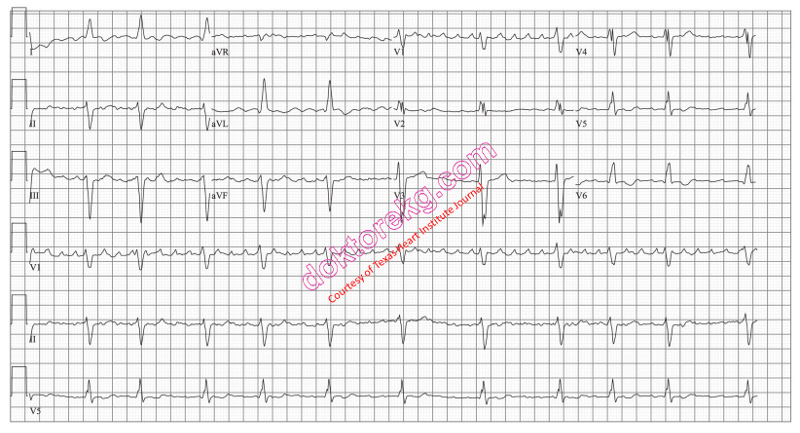
ECG 1c. His ECG was repeated on the second day of discontinuation of propafenone (above).
QRS width decreased to 142 msec. The rhythm is atrial flutter with varying degrees of AV block.
The ECG above has been used with the permission of Texas Heart Institute Journal.
Click here for a more detailed ECG
Click here to go to the relevant article of the Texas Heart Institute Journal
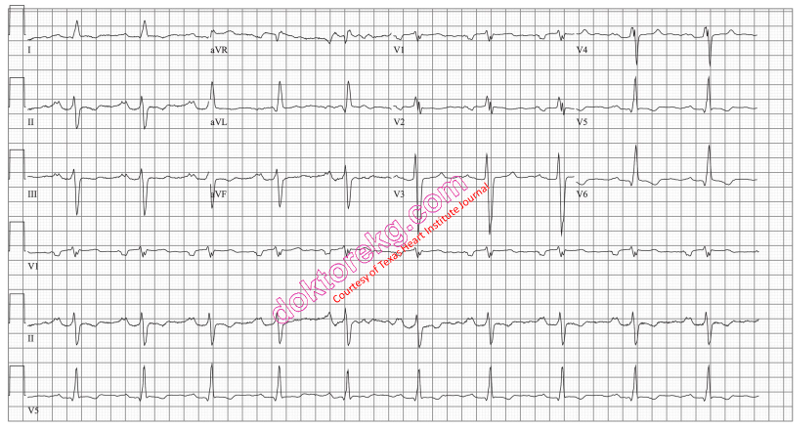
ECG 1d. He underwent cardioversion on the fourth day of discontinuation of propafenone after which sinus rhythm
was restored (above). First degree AV block, left atrial abnormality and left axis deviation are seen.
The ECG above has been used with the permission of Texas Heart Institute Journal.
Click here for a more detailed ECG
Click here to go to the relevant article of the Texas Heart Institute Journal
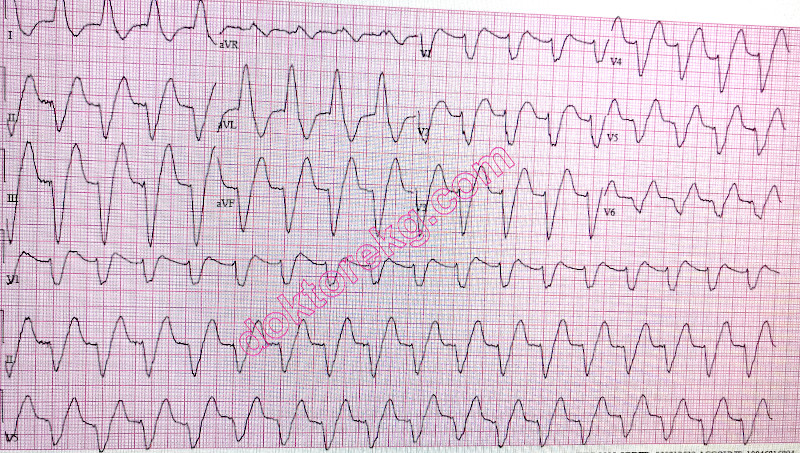
ECG 2. Above is an ECG from an elderly woman with history of atrial fibrillation. She is on Propafenone therapy.
She presents with complaints of weakness, nausea, vomiting, and diarrhea.
Her potassium was 3.4 on that day.
Wide QRS rhtyhm is seen. Do you think it is ventricular rhythm?
Propafenone toxicity was diagnosed and Propafenone was held.
The ECG normalized the next day.
Dr Wayne Whitwam has donated the above ECG to our website.
Click here for a more detailed ECG
is a Class Ic antiarrhythmic agent and a sodium channel blocker.
also has mild beta-blocking and calcium channel blocking effects.
Propafenone MAY be used for
the treatment of paroxysmal supraventricular tachycardia
the treatment of ventricular tachycardia
acute termination of atrial fibrillation
reduction of VPCs
ECG changes that may be observed in patients under Propafenone therapy
(at therapeutic concentrations)
Decreased atrial rate in atrial flutter.
Conversion of atrial fibrillation to sinus rhythm.
Reduction in the number of APCs and VPCs
Atrial flutter may develope in patients taking propafenone for recurrent episodes of atrial fibrillation (both classical and atypical electrocardiographic and atrial activation patterns have been described). The incidence of atrial flutter in patients taking class IC antiarrhythmic drugs for recurrent atrial fibrillation is estimated to range from 3.5-20%.
ECG abnormalities which may be observed in patients with Propafenone overdose
Bradycardia
Sinoatrial block
Atrioventricular (AV) block
1:1 atrioventricular conduction in atrial flutter
Ventricular tachycardia
QRS widening
QT interval prolongation (as a result of QRS widening)
Cardiac memory (persistent T wave inversions even after disappearance of QRS widening)
References
Indian Pacing Electrophysiol J 2010;10:278-280.
Heart 2001;85:424-429.
Chou's Electrocardiography in Clinical Practice. Adult and Pediatric. 5th ed. Philadelphia. WB Saunders. 2001.
CJEM 2004;6:349-356.
Indian Pacing Electrophysiol J 2010;10:278-280.
J Cardiovasc Electrophysiol 2006;17:565-566.
Pacing Clin Electrophysiol 2007;30:1161-1164.
Cardiol J 2010;17:619-622.
J Med Toxicol 2010;6:37-40.
Mayo Clin Proc 1986;61:98-103.
Bratisl Lek Listy 2004;105:14-17.
ECG 1a. The ECG above belongs to a 46 years-old man who had undergone aortic valve replacement about 20 years ago.
The rhythm is sinus. First degree AV block, left atrial abnormality and left axis deviation are seen.
The ECG above has been used with the permission of Texas Heart Institute Journal.
Click here for a more detailed ECG
Click here to go to the relevant article of the Texas Heart Institute Journal
ECG 1b. The ECG above belongs to the same patient. It was recorded approximately 1 year after ECG 1a.
At the time of recording of the ECG 1b, he was under Propafenone therapy for one month.
Now, his ECG shows sinus rhythm and widened QRS complexes (360 msec) with left bundle branch block morphology.
Propafenone was discontinued.
The ECG above has been used with the permission of Texas Heart Institute Journal.
Click here for a more detailed ECG
Click here to go to the relevant article of the Texas Heart Institute Journal
ECG 1c. His ECG was repeated on the second day of discontinuation of propafenone (above).
QRS width decreased to 142 msec. The rhythm is atrial flutter with varying degrees of AV block.
The ECG above has been used with the permission of Texas Heart Institute Journal.
Click here for a more detailed ECG
Click here to go to the relevant article of the Texas Heart Institute Journal
ECG 1d. He underwent cardioversion on the fourth day of discontinuation of propafenone after which sinus rhythm
was restored (above). First degree AV block, left atrial abnormality and left axis deviation are seen.
The ECG above has been used with the permission of Texas Heart Institute Journal.
Click here for a more detailed ECG
Click here to go to the relevant article of the Texas Heart Institute Journal
ECG 2. Above is an ECG from an elderly woman with history of atrial fibrillation. She is on Propafenone therapy.
She presents with complaints of weakness, nausea, vomiting, and diarrhea.
Her potassium was 3.4 on that day.
Wide QRS rhtyhm is seen. Do you think it is ventricular rhythm?
Propafenone toxicity was diagnosed and Propafenone was held.
The ECG normalized the next day.
Dr Wayne Whitwam has donated the above ECG to our website.
Click here for a more detailed ECG